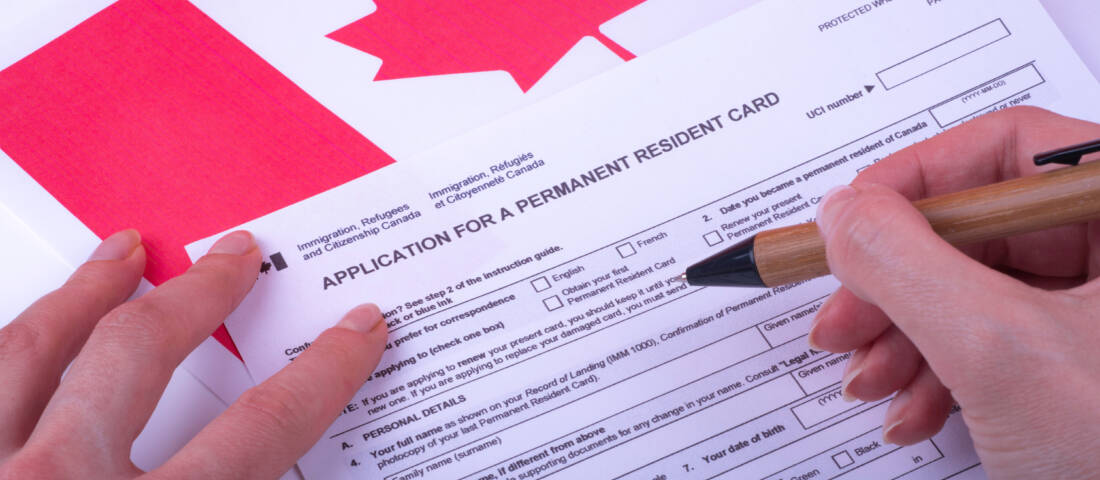
A Canada permanent resident is someone who has been given permanent resident status by immigrating to Canada, but is not a Canadian citizen. Canadian permanent residents can:
- get many of the social benefits that Canadian citizens receive, including health care coverage and education
- live, work or study anywhere in Canada
- apply for Canadian citizenship,
- Receive protections under Canadian laws and the Canadian Charter of Rights and Freedoms
Permanent residents must pay taxes and respect all Canadian laws at the federal, provincial and municipal levels. Qualifications and requirements for permanent residency are governed by Immigration, Refugees and Citizenship Canada (IRCC).
Ackah Business Immigration Law guides you through your immigration journey to become a Canada Permanent Resident. Our innovative legal practice combines professional knowledge, personal attention, and supportive advice. With knowledge and expertise, we navigate complex Canadian and U.S. immigration rules and regulations to solve problems and remove obstacles, before you get to the border.
Qualifications To Become A Permanent Resident
The requirements and process to become a permanent resident are different depending on which pathway you take. It’s important to consult with an immigration professional who can explain your options and the best way for you to qualify. When you become a permanent resident, you will be given a PR Card to show you have PR status and to use for travel outside of Canada.
There are many differences between Canada Permanent Residents and Canadian Citizenship. If you have been a permanent resident for at least 3 years and have been physically present in Canada for 1,095 days within the last 5 years, you are eligible to apply for Canadian Citizenship.
Do I Qualify for Canadian Citizenship?
Pathways To Become A Canada Permanent Resident
Permanent Residence: Express Entry
Express Entry is used to manage applications for Permanent Residence under three federal economic immigration programs:
FREE EXPRESS ENTRY CALCULATOR:
ARE YOU QUALIFIED TO MOVE TO CANADA?
Express Entry is a point-based system where applicants are awarded up to 1200 points o identify those applicants who are most likely to succeed in Canada. The highest-ranking candidates in the Express Entry pool receive an Invitation to Apply (ITA) and have 60 days to complete their application for Permanent Residence in Canada.
Permanent Residence: Economic and Business Immigration
The Canadian government wants entrepreneurs to help build Canada’s economy and create jobs for Canadians. Due to an aging workforce and declining birthrate, Canada has created programs and immigration opportunities for skilled and educated foreigners who want to move to Canada.
- Canada’s Start-Up Visa targets immigrant entrepreneurs with the skills and potential to build businesses in Canada that are innovative, can create jobs for Canadians and can compete on a global scale.
- The Self-Employed Persons Program allows people to immigrate to Canada permanently as a self-employed person.
- Quebec's Investor Program is for immigrants with business experience who want to move to Quebec and are willing to make a 5-year investment of C$1,200,000 in Quebec.
- The Provincial Nominee Program for Entrepreneurs allows each territorial and/or provincial government to select immigrants based on the specific economic needs of that territory or province.
Permanent Residence: Parent and Grandparents Program
The Parent and Grandparent Program (PGP) is for Canadian citizens and permanent residents to sponsor their parents and grandparents to move to Canada as permanent residents who can later apply for Canadian citizenship.
Permanent Residence: Family Class Sponsorship
Canada immigration places a high priority on family reunification and keeping families intact. Canada’s Family Class Sponsorship Program reunites families by allowing adult permanent residents or citizens to sponsor a relative for immigration to Canada. Family class immigration includes programs for spousal sponsorship, parents, grandparents and dependent children to immigrate to Canada as permanent residents.
TR to PR Pathway: Canada's 6 New Temporary Permanent Resident Pathways
Six new temporary pathways to permanent residence opened on May 6, 2021, with a goal of accelerating permanent residency for 90,000 essential healthcare workers, temporary essential workers in other fields, international graduates and francophones and bilingual workers already in Canada:
- Workers in-Canada: Stream A (healthcare): 20,000 applicants
- Workers in-Canada: Stream B (essential non-healthcare): 30,000 applicants
- International Graduates: 40,000 applicants
- French-speaking Workers in-Canada: Stream A (healthcare)
- French-speaking Workers in-Canada: Stream B (essential, non-healthcare)
- French-speaking International Graduates
Temporary PR pathway streams will remain open until November 5, 2021, or until they have reached their limit. There is no cap for French-speaking or bilingual immigration candidates.
Do You Have Questions About Becoming a Canada Permanent Resident?
Contact Ackah Law today at (587) 316-9082 Ext. 100 or 1-800-932-1190 or email us directly.
Learn More About Immigration To Canada and Becoming A Permanent Resident:
- Express Entry
- Federal Skilled Worker
- Federal Skilled Trades
- CEC Applications
- Express Entry Free Calculator
- Provincial Nominee Program
- Family Class Applications
- Self-Employed Applications
- Entrepreneur Applications
- Start-Up Visa Program
- Home Caregiver / Support Worker
- Global Skills Stream
- Quebec Immigration: QEP
- Quebec Selection Certificate: CSQ
- Quebec Acceptance Certificate: CAQ
FAQS
Can Canadian Permanent Residents and Citizens Sponsor Family Members for Permanent Residence?
Yes. Eligible Canadian citizens and permanent residents may sponsor certain relatives, including spouses or partners, dependent children, parents and grandparents. Other relatives may qualify only in limited circumstances, and each sponsorship category has its own requirements.
Ackah Law can help determine who you may sponsor and guide you through the appropriate family sponsorship process.
What Is the Provincial Nominee Program?
The Provincial Nominee Program allows participating provinces and territories to nominate people for permanent residence based on their economic and labour market needs. Each jurisdiction sets its own streams and eligibility criteria.
Some nominations are connected to Express Entry, while others follow a non-Express Entry process. A nomination does not grant permanent residence automatically. IRCC makes the final decision, and applicants are expected to settle in the province or territory that nominated them.
What Permanent Residence Options Are Available to Entrepreneurs?
Entrepreneurs may qualify through provincial entrepreneur streams or other economic immigration pathways based on their business experience, proposed investment and intended destination. Some may first obtain a temporary C11 entrepreneur work permit before pursuing a separate permanent residence pathway.
The federal Start-Up Visa and Self-Employed Persons programs are currently paused for new applications. Ackah Law can review your background and develop an appropriate business immigration strategy.
Can Self-Employed Individuals Apply for Permanent Residence in Canada?
Potentially. Self-employed individuals may qualify through an economic immigration program if their work experience meets that program’s requirements. However, the federal Self-Employed Persons Program is currently paused and is not accepting new applications.
Being self-employed does not create a permanent residence pathway on its own. Eligibility depends on the person’s experience, occupation, intended province and the requirements of the selected program.
Who Qualifies for the Self-Employed Persons Program?
Under the existing eligibility framework, applicants need at least two years of relevant experience in cultural activities or athletics. This may include self-employment in the field or participation at a world-class level. Applicants must also intend and be able to become self-employed in Canada and make a significant contribution to Canadian cultural or athletic life.
The program is currently paused, so these criteria apply to existing applications and may change if intake resumes.
Does Self-Employment Count as Work Experience for Canadian Permanent Residence?
Sometimes. Paid self-employed work may count under the Federal Skilled Worker Program if it meets the occupational, skill-level and documentation requirements. However, self-employment generally does not count toward the Canadian Experience Class or as qualifying Canadian work experience, with a limited exception for some physicians.
Provincial programs may apply different rules, so applicants should confirm the requirements of their intended pathway before relying on self-employed experience.
Can an International Student Be Self-Employed in Canada?
Yes, if the student is authorized to work off campus and follows all conditions attached to their study permit. Time spent providing services, selling products or earning commissions counts toward the off-campus work limit during regular academic sessions. Self-employed students must track their hours and be able to prove compliance.
Work completed while studying full-time generally does not count toward the Canadian Experience Class, although it may count under another program if all requirements are met.
What Is the Global Skills Strategy?
The Global Skills Strategy provides expedited processing for eligible and complete employer-specific work permit applications submitted by certain highly skilled temporary workers. IRCC aims to process qualifying applications within two weeks.
The Global Skills Strategy is not a permanent residence program and does not provide a direct fast-track route to PR. However, authorized Canadian work experience may later help a worker qualify through a separate permanent residence pathway.
How Long Does It Take to Process a Canadian Permanent Residence Application?
Permanent residence processing can take several months or several years, depending on the immigration program, application inventory, destination and complexity of the case. An incomplete application, additional document requests or extended medical, criminal or security reviews can add time.
Applicants should check IRCC’s current processing estimate for their specific program. Ackah Law can help prepare a complete application and reduce avoidable delays, although no processing timeline can be guaranteed.
How Much Will Legal Services Cost?
The cost depends on the immigration service required and the complexity of the case. After learning more about your circumstances, Ackah Law can provide a fee quote explaining the agreed legal services and any separate government or third-party expenses.
Does Ackah Law Offer Flat-Fee Pricing?
Yes. Ackah Law offers flat-fee pricing for agreed legal services, with the scope and legal fee set out in the engagement agreement. This structure helps clients understand the professional fees before work begins. Government charges and third-party expenses may still be separate.
Are Ackah Law’s Legal Fees All-Inclusive?
Not necessarily. Legal fees and government or third-party costs are separate unless the engagement agreement states otherwise. Ask Ackah Law for a clear breakdown of the legal fee, government application charges and expected third-party expenses before proceeding.
Can I Pay My Legal Fees in Instalments?
Payment arrangements depend on the matter and Ackah Law’s current payment policies. Ask the firm about available instalment options, payment schedules and the terms that would apply to your case.