

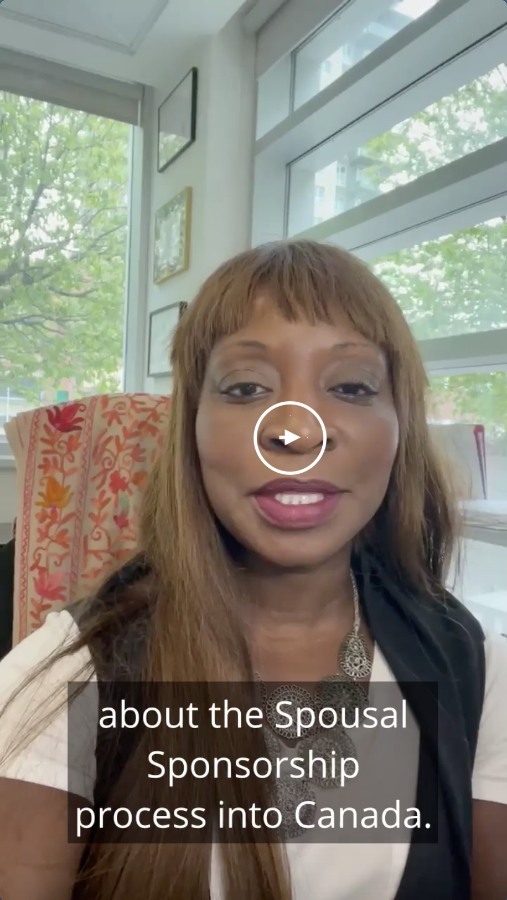
Canada immigration places a high priority on family reunification and keeping families intact. Canada’s Family Class Sponsorship Program reunites families by allowing adult permanent residents or citizens to sponsor a relative for immigration to Canada. Family class immigration includes programs for spousal sponsorship, parents, grandparents and dependent children to immigrate to Canada.
Like so many other pathways to Canadian immigration, there are many requirements that must be met in order for the application to be accepted and permanent residence status granted. Chief among the requirements for spousal sponsors is their sponsorship eligibility according to federal standards, and if living in Quebec, to meet the specific Quebec conditions.
What Is Spousal Sponsorship?
Immigration, Refugees and Citizenship Canada (IRCC) defines Spousal Sponsorship as someone who is eligible to sponsor a "spouse, common-law or conjugal partner (partner), or dependent children if you are a Canadian citizen or a permanent resident of Canada. To be a sponsor, you must be 18 or older."
You are eligible to become a spousal sponsor if you are:
- at least 18 years old
- a Canadian citizen, or a person registered in Canada as an Indian under the Canadian Indian Act or a permanent resident,
- living in Canada:
- if you’re a Canadian citizen living outside Canada, you must show that you plan to live in Canada when your sponsored relative becomes a permanent resident.
- You can’t sponsor someone if you’re a permanent resident living outside of Canada.
- able to prove that you can meet the basic financial needs of your spouse or dependent child and are not receiving social assistance for reasons other than a disability, and;
You must also be able to show that you can provide basic needs for:
- yourself,
- your spouse or partner,
- your spouse or partner’s dependent child(ren) (if applicable)
- your dependent child(ren) (if you’re sponsoring only your dependent child).
If you are eligible, you can then apply to serve as a sponsor. This is a two-stage process that begins with your application to the Case Processing Centre (CPC). They will review your application and let you know if/when the IRCC has approved the application. At the same time that you submit this application, your spouse or partner must also submit an application for permanent residence status.
There is a spousal sponsorship application for spouses already living in Canada as well as a separate application for spouses living outside of the country. For applicants who are applying from outside of Canada, CPC will send the application to the nearest Canadian visa office for processing.
Things to Know
- The Canadian government allows any eligible spouses or partners in Canada who are applying through spousal sponsorship would be permitted to work while they wait for the processing to be completed. The IRCC issues open work permits to those who have applied for permanent residency from within Canadian borders.
- In 2019, Canada launched a pilot project where some undeclared family members can be sponsored. Family members may be eligible if they were not declared or examined when their sponsor became a permanent resident. The IRCC Help Centre has detailed eligibility criteria.
- Spousal Sponsorship immigration application packages are on the IRCC website for spouses in Canada and those outside of the country.
FREE DOWNLOAD: HOW TO SPONSOR YOUR SPOUSE TO MOVE TO CANADA
Canada immigration laws can be confusing, and a missed deadline or missing supporting documents can result in delays or even denial of your immigration application. A Family Class or Spousal Sponsorship application completed with the help of a knowledgeable and experienced immigration professional can prevent many mistakes, save time and reduce stress. An experienced Canada immigration lawyer or legal professional can help you to understand any points of confusion or overcome any issues that may pose a challenge to the application process.
Contact Ackah Law today at (403) 452‑9515 Ext. 100 or 1-800-932-1190 or email us directly.
Learn More About Canada Spousal Sponsorship:
- Faster Processing of Spousal Sponsorship Applications
IRCC has promised faster processing of Spousal Sponsorship applications - Canada Is Accepting Spousal Sponsorship Permanent Resident Applications During COVID Restrictions
IRCC special procedures during COVID provide for extra time to submit required spousal sponsorship PR application required supporting documentation. - Marriage Fraud: How Do I Prove My Spousal Application Is Legitimate?
IRCC considers marriage fraud and sham marriages, including a marriage of convenience, a serious issue and Canadian citizens or permanent residents who engage in marriage fraud for the purpose of immigration may be charged with a crime. - Canada Spousal Sponsorships & Work Permits
Spousal Sponsorship is a way for a permanent resident or citizen of Canada to sponsor their spouse or common-law partner to immigrate to Canada.
More Family Class Immigration Information:
FAQS
Who Can Be Sponsored Through Spousal Sponsorship?
An eligible sponsor may sponsor a legally married spouse, common-law partner or conjugal partner for permanent residence. Common-law partners must generally have lived together continuously for at least 12 months. Conjugal partners must live outside Canada and have been unable to marry or live together because of significant barriers. In every case, the relationship must be genuine and not primarily for immigration purposes.
How Does IRCC Assess Whether a Relationship Is Genuine for Sponsorship Purposes?
IRCC looks for a genuine relationship that was not entered into primarily for immigration. Evidence may include marriage or common-law documents, shared finances, photos, travel history, communication records and recognition by family or friends. Common-law couples generally need 12 consecutive months of cohabitation. IRCC may request further evidence or an interview.
What Is the Difference Between Inland and Outland Spousal Sponsorship?
Inland sponsorship is for spouses or common-law partners living together in Canada. The applicant may qualify for an open work permit, but travel can create risks if they cannot re-enter Canada. Outland sponsorship is processed under the Family Class and is commonly used when the applicant lives abroad, although it may also be used by some applicants in Canada.
A refused Family Class application may carry a right of appeal, while an inland refusal cannot be appealed to the Immigration Appeal Division. Ackah Law can assess which spousal sponsorship route best fits your circumstances.
Can a Sponsored Spouse Work in Canada While Waiting for PR?
Yes, if they obtain authorization to work. A sponsored spouse or partner living in Canada with their sponsor may apply for a Spousal Open Work Permit after IRCC confirms that the permanent residence application is complete. Once approved, the permit generally allows work for most eligible Canadian employers. Ackah Law can assess the requirements and timing.
How Long Does Spousal Sponsorship Take?
Spousal sponsorship processing times change regularly and depend on whether the applicant lives inside or outside Canada, whether they plan to settle in Quebec and the complexity and completeness of the application. Inland applications are not always faster than outland applications. Check IRCC’s processing-time tool for the latest estimate.
What Financial Obligations Does a Spousal Sponsor Take On?
A spousal sponsor signs a legally binding undertaking to provide the sponsored person’s basic needs for three years after they become a permanent resident. If the sponsored person receives social assistance during that period, the sponsor may have to repay it.
The undertaking continues even if the relationship ends or the sponsor’s financial circumstances change. It cannot be cancelled or shortened after permanent residence is granted.
How Long Does a Sponsor’s Financial Responsibility Last?
A sponsor signs an undertaking to provide basic needs and repay qualifying social assistance. Outside Quebec, responsibility lasts three years for a spouse or partner, 10 years or until age 25 for a child under 22, whichever comes first, three years for an older dependent child, 20 years for parents or grandparents and 10 years for other relatives. Quebec periods differ.
What Other Family Members Can Be Sponsored?
Eligible sponsors may sponsor dependent children and, when intake permits, parents or grandparents. An orphaned sibling, niece, nephew or grandchild may qualify if they are under 18, both parents have died and they are single. A narrow exception also permits sponsorship of one other relative when the sponsor has no closer eligible relatives. Ackah Law can assess whether an exception applies.
What Is the Parent and Grandparent Program?
The Parent and Grandparent Program allows eligible Canadian citizens, permanent residents and people registered under the Indian Act to sponsor their parents or grandparents for permanent residence.
The new intake is currently paused. IRCC continues to process existing applications but is not accepting new interest-to-sponsor forms or inviting potential sponsors until further notice.
How Do I Sponsor My Parents or Grandparents to Canada?
When the Parent and Grandparent Program accepts new applications, you must first be invited to apply. You must also live in Canada, meet the applicable income requirement for the three preceding tax years and sign an undertaking to financially support the sponsored family members. Ackah Law can review your eligibility and help you consider temporary options while PGP intake remains paused.
How Long Does It Take to Sponsor Parents or Grandparents?
There is no fixed processing time for parent and grandparent sponsorship. Timelines depend on when the application was submitted, IRCC’s application inventory, the completeness of the file and whether the family will settle in Quebec. Existing applications may take several years, so applicants should check IRCC’s current estimate before making plans.
How Much Will Legal Services Cost?
The cost depends on the type and complexity of your immigration matter. Standard cases may be handled for a flat fee, while complex files or standalone legal advice may be billed hourly or per consultation. Government filing fees and other costs may be separate, so Ackah Law provides a tailored quote and explains what is included before work begins.
Does Ackah Law Offer Flat-Fee Pricing?
Yes. Ackah Law offers flat-fee pricing for standard immigration cases. Complex matters may be billed hourly or per consultation, while government filing fees and other disbursements may be separate. The firm explains what is included in the quoted fee and provides an estimate of any additional costs.
Are Ackah Law’s Legal Fees All-Inclusive?
Legal fees and government or third-party fees are separate costs unless your engagement agreement states otherwise. Before proceeding, ask Ackah Law for a clear breakdown of the legal fees, government application fees and expected third-party costs.
Can I Pay My Legal Fees in Instalments?
Payment arrangements depend on the matter and Ackah Law’s current payment policies. Ask the firm about available instalment options, payment schedules and the terms that would apply to your case.